Wednesday, December 23, 2020

Medical Marijuana and My Friend Peter McWilliams

Peter and I went to Allen Park High School together in the mid-1960's
. He was a bright and precocious student but was considered by many to be a weird nerd. Like many nerds before or since, Peter was grossly underestimated by most of his high school peers.


Peter came into his own during his college days at Eastern Michigan University and began a successful career as an author. The story of his death is emblematic of the senseless and inhumane war on marijuana waged by a misguided legal system. In his case, the law killed him. The following article ran in Liberty magazine, written by a staff writer.


1950-2000

 THE LIFE AND DEATH OF PETER MCWILLIAMS


Another Casualty Of The War On Drugs

On June 14, Natalie Fisher went to Peter McWilliams' home, where she worked as housekeeper to the wheelchair-bound victim of AIDS and cancer.  In the bathroom on the second floor, she found his life-less body.  He had choked to death on his own vomit.

As regular readers of Liberty know, Peter, a world famous author* and a regular contributor to these pages, was diagnosed with AIDS and non-Hodgkins lymphoma in early 1996.  Like many people stricken with AIDS or cancer, he had great difficulty keeping down the drugs that controlled or mitigated those afflictions.  He began to smoke marijuana to control the drug-induced nausea.  It saved his life: by early 1998, both his cancer and his AIDS were under control.

In 1996, California voters enacted a law legalizing the use of marijuana by people like Peter, who needed it for medical reasons.  Peter was an enthusiastic supporter of the new law, both because he believed in maximizing human liberty and because marijuana had saved his life and was, indeed, keeping him alive.

But Peter was more than an advocate.  After the Clinton administration announced it would ignore the state law and continue to prosecute marijuana users who needed the drug to stay alive, it remained very difficult for others who needed medical marijuana to get the drug.  So Peter helped finance the efforts of Todd McCormick to cultivate marijuana for distribution to those who needed it for medical reasons.

His articulate advocacy for legalizing medical marijuana brought him to the attention of federal authorities, who got wind of Todd McCormick's attempt to grow marijuana for medicinal purposes and of Peter's involvement with it.  And it came to pass that in the early morning of December 17, 1997, federal agents invaded his home and business, and confiscated a wide array of his property 
(including his computers, one of whose hard disks contained the book he was writing).  In July 1998 they arrested him on charges of conspiring to grow marijuana.

His mother and brother put up their homes as bond and he was released from jail to await his trial.  One of the conditions of his bail was that he smoke no marijuana.  Unwilling to risk the homes of his mother and brother, he obeyed the order.  His viral load, which had fallen to undetectable levels, now soared to dangerous levels:

"Unable to keep down the life-saving prescription medications, by November 1998, four months after my arrest, my viral load soared to more than 256,000.  In 1996 when my viral load was only 12,500, I had already developed an AIDS-related cancer ....  Even so, the government would not yield.  It continued to urine test me.  If marijuana were found in my system, my mother and brother would lose their homes and I would be returned to prison" said Peter.

Peter's health wasn't all that was ruined.  Unable to work because of the disease and facing mounting legal bills, he was forced into bankruptcy.  But he didn't give up: he experimented with various regimens and eventually managed to keep his medication down for as long as an hour and a quarter, long enough for some of the medication to work its way into his system.  But the process had weakened him to the point where he was wheelchair-bound.

His publishing venture destroyed and his assets gone, Peter focused on his upcoming trial.  He relished the chance to defend himself in court: medical marijuana was legal under state law and he believed a spirited defense could both exonerate him and help establish a legal fight to grow marijuana for medical purposes.

Last November, news came that would have crushed a lesser man: the judge in the case ruled that Peter could not present to the jury any information about his illness, the fact that the government's own research concludes that marijuana is virtually the only way to treat the illness, or that using marijuana for medical purposes was legal in California.

Unable to defend himself against the government's charges, Peter concluded that he had no choice but to plea bargain.  He agreed to plead guilty, in hopes that any incarceration could be served under house arrest, since sending him to prison, where he would not be able to follow his lifesaving regimen, would be tantamount to sentencing him to death.

On June 11, there was a fire in his home, which destroyed the letters to the judge that he had acquired and the computer containing the book he was writing on his ordeal.  Three days later, he died, apparently as a result of his inability to keep his medication down.

When I heard that Peter had died I was grief-stricken.  I'd known him only for a couple of years, but that was more than enough for me to come to respect and love him.  I became acquainted with him shortly after the drug police raided his home, the first in the series of calamities that befell him.

Three things about Peter were truly amazing.

Despite the government's persecution, which resulted in the loss of virtually all his property, his freedom, and ultimately his life, he never descended into hatred.  Time and time again, he cautioned friends against falling victim to hate or giving in to the desire for revenge.  "My enemy is ignorance," he'd say, "not individuals."

I was also astonished by his ability to focus on the future and not get depressed about the calamities that befell him.  I spoke to him dozens, perhaps hundreds, of times during his ordeal, and I do not recall a single time when he even remotely sounded down or acted as if he were seeking my sympathy.

The third astonishing thing about Peter was his remarkable generosity of spirit.  He always offered help and encouragement to others, no matter what his own circumstances were.  A few months ago, I was contacted by a publisher with a request to reprint an article of Peter's that had appeared in Liberty.  The publisher was one of the few who routinely is willing to pay for reprint rights, so I called Peter with the good news, and asked him how much he'd like me to ask for his article.
 
"Nothing," he said.  "I want to encourage people to reprint my writing on the drug war." I reiterated that this publisher happily paid $100 to $200 for reprint rights, that it was very prosperous and that he could use the money.  (By this time, Peter was so broke that he was asking friends to use his website as a portal to various shopping websites so that he would receive the small commissions that they offer.) But Peter would have none of it.  "We are in a war of ideas," he said.  "And I want my writing to have the widest possible effect."

I must admit that when I learned the tragic news of Peter's death, my spirit was not so generous as his.  I thought about the judge who had denied him his day in court and had ordered him to forgo the medication that kept him alive.  I suppose he's happy, I said to myself, now that he's murdered Peter.

I'm one of those libertarians who generally tries to look at government policies more as folly than as evil.  But sometimes, the evil that government does transcends simple folly.  Sometimes I have to be reminded that there is a real human cost of government.  It happened when I learned of the government's killing of 86 people at Waco and its murder of Vicki Weaver at Ruby Ridge.  And it happened with Peter, too.

Peter never wanted to be a martyr.  But he wanted to live in a free country, where people respected each others rights and choices, and he did what he thought was best to keep himself alive and to advance the cause of liberty.  He was one of the most joyous people I've ever known, a hero in every sense of the word.

So rather than belabor his tragic death, Liberty will celebrate his life by publishing for the first time the full text of his address to the Libertarian Party National Convention in 1998.  It's vintage Peter McWilliams: funny, wise, charming, intelligent, full of piss and vinegar.

I invite you to read and enjoy it -- and join with other people of good will in celebrating the life of this good, kind, decent, generous, and brilliant man. 


* He wrote several best-sellers, including some of the first books about using microcomputers, "How to Survive the Loss of Love" ( which sold more than four million copies, several books of poetry ( with total sales of nearly four million ), and "Ain't Nobody's Business If You Do", a brilliant analysis of consensual "crimes."

MAP posted-by: Doc-Hawk

See William F. Buckley's take on Peter's death in part two of this tragedy.

Wednesday, December 16, 2020

The Elusive Purple Gang videocast

In October 30th, 2020, I was interviewed about my true crime book The Elusive Purple Gang: Detroit's Kosher Nostra by D.A. Kulczyk and Phil D'Asaro for their Cities of Blood videocast. This title is available in a quality paperback, ebook, or audio format. Makes a great holiday gift.

Elusive Purple Gang interview

Thursday, December 10, 2020

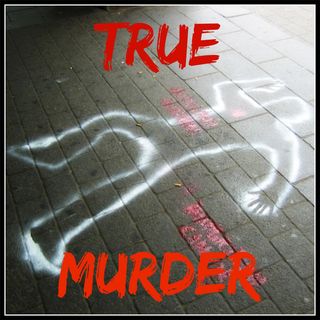
TERROR IN YPSILANTI Podcast -Gregory A. Fournier From: True Murder: The Most Shocking Killers

TERROR IN YPSILANTI-Gregory A. Fournier

TERROR IN YPSILANTI-Gregory A. Fournier

True crime podcast recorded on December 9, 2020 on the John Norman Collins murders from July 1967 through August 1969 in Ypsilanti, Michigan.

Available in paperback, all ebook formats, and an audio.

An eight-part miniseries is being developed by a Canadian media company for possible production in the next few years. First, a "proof of concept" pilot must be shopped around and then picked up by a production company. I'm confident this project will become a reality in the next couple of years. Stay tuned.

Terror In Ypsilanti: John Norman Collins Unmasked podcast (90 minutes)

Friday, December 4, 2020

Cities of Blood Terror In Ypsilanti Videocast

On November 29, 2020, I spoke with D.A. Kulczyk and Phil D'Asaro about my true crime account of the John Norman Collins murders in Ypsilanti, Michigan between July 1967 and August 1969. Makes a good holiday gift for the true crime lover in your life.

Terror In Ypsilanti 2020 Videocast

Monday, November 16, 2020

The Grande Ballroom--Detroit's Hard Rock Mecca

Mural painted on plywood used to board up the Grande Ballroom.

Detroit empresario Harry Weitzman was the financier and original owner of the Grande Ballroom located on the corner of Grand River Blvd and Joy Rd in the predominately Jewish Petosky-Otsego neighborhood on Detroit's Westside. Construction began in May 1928 on the multiuse, two-story building with basement space which opened that October. The architectual style was Art Deco with Spanish Colonial Revival elements. The building was not equipped with air conditioning, so the ballroom was surrounded on three sides by twenty-two Moorish arched windows for cross-ventilation during the hot summer months.

Retail shops occupied the first floor, the mezzenine, and the basement. The ballroom dance floor filled most of the second floor--one of the largest in the Midwest with a capacity for 1,837 dancers. The hardwood floor featured a "sprung" design built over subflooring and a lattice work of cork strips to allow the floor to cushion the dancers' steps, and whether by design or happy coincidence, the ballroom had fabulous acoustics.

The Grande Ballroom became a favorite playground for the surrounding Jewish neighborhood. One can imagine Purple Gang members dressed in fancy clothes, strolling into the dance hall checking out the local talent. From the 1930s until the end of World War II, the Grande featured jazz and big band music. After the war, the music business changed as prewar entertainment habits changed.

The jukebox and a burgeoning record industry turned many dancers into listeners. Youth in the1950s began hosting basement and garage record parties to the detriment of ballroom culture. Commercial radio and television did not help either.

The rise of teen dance television programs like Dick Clark's American Bandstand and Swinging Time with Robin Seymour helped record companies shift America's musical tastes from big bands and orchestras to smaller rock & roll bands and rhythm & blues groups that could lip synch their music and reach a huge, teenage audience. All the city's ballrooms fell on hard times. The Grande's dance floor was turned into a roller skating rink for a time and then a storage facility for mattresses.

In 1966, WKNR deejay "Uncle" Russ Gibb cut a rent-to-buy deal with current owners, the Kleinmann family, for $700 a month. Gibb turned the boarded-up eyesore into a hard rock venue modeled after Bill Graham's San Francisco Fillmore Theater. The surrounding neighborhood and the outside of the Grande had seen better days and was in decline.

Gibb asked other Detroit deejays to partner with him, but they said, "It will never work; that's a Black neighborhood." He reached out to John Sinclair, a key figure in the collaborative Detroit Artists' Workshop, which morphed into Trans-Love Energies Unlimited. Together, they made the Grande Ballroom a success. Where else could young people in Detroit go to see two local bands and two headliner groups for five dollars?

Russ Gibb wanted the Grande to be a place where bands were free to write and perform their own material and forge their own identities. He was not interested in cover bands or bar bands. To help create a psychedelic atmosphere, one of the largest strobe lights ever constructed was installed.

A large screen behind the bandstand displayed light shows created with vegetable oil, food coloring, and a piece of Saran Wrap manipulated in a clear glass bowl or plate projected onto the screen with a transparency projector. This low tech light show combined with the strobe light was unlike anything Detroit kids had ever experienced before. Pretty soon, the weekly gatherings of the tribe began to resemble the characters on the pages of Rob Crumb's Zap Comix.


First Grande Ballroom handbill by Gary Grimshaw in October 1966.
 

If Crumb was the artist in residence for the Fillmore West in San Francisco, Gary Grimshaw and Carl Lundgren were the artists in residence for the The Grande Ballroom. Their original graphic art became famous and was featured in the Grande's weekly handbills which were produced in large numbers and widely distributed. Today, original Grande poster and handbill art attracts collectors, especially if it's signed by the artists or featured band members.

An example of Carl Lundgren's work.
 

Arguably, the Grande Ballroom is the birthplace of punk and hard rock music. They started with Detroit's local power bands like SRC, Frost, Iggy and the Stooges, The Amboy Dukes, Bob Seger and the Last Herd, and the Grande's house band The MC5. Then the San Francisco bands like Jefferson Airplane, The Grateful Dead, and Janis Joplin with Big Brother and the Holding Company started making Detroit appearances on their concert tours.

When emerging British rock groups heard about the Grande's rabid rock & roll scene, they made Detroit part of their tours--groups and performers like The Who, Led Zeppelin, Pink Floyd, Jeff Beck, Jethro Tull, Procol Harem, and Cream. To get a sense of how intense performances could be, listen to MC5s "Kick Out the Jams" album which was recorded live at the Grande.

The Grande also hosted Black jazz and blues performers helping to expand their audiences. This drew in racially mixed crowds and endeared the Grande to the local community--performers like John Lee Hooker, B.B. King, John Coltrane, Howling Wolf, Taj Mahal, and Sun Ra were booked, as well as rock & roll legends Chuck Berry, Bo Diddley, and Jimi Hendrix

Russ Gibb closed the Grande on New Year's Eve 1972 after six years of operation. The counter-culture and the record business had changed. Corporate suits realized they could make megabucks promoting these groups through much larger venues like auditoriums, university fieldhouses, and stadiums. One by one, the groups signed binding record contracts changing the performers and their performances, making the Grande's grassroots venue a victim of its own success.

Gibb returned to teaching and landed a job at Dearborn High School where he worked until retirement promoting media education. As the decades passed, the weather and vandals turned the dance hall into a ruin. Some efforts are being made to restore the roof of the building to make it weather tight.

***

Suffice it to say, the Grande's history takes more than a blog post to recount. There is an interesting book available on Amazon, named aptly enough The Grande Ballroom: Detroit's Rock 'N' Palace, by Leo Early.

An Emmy-winning documentary Louder Than Love--The Grande Ballroom was released in 2012. It tells the rock palace's story as told by many of the people who made musical history there. The 52 minute documentary is linked below.

Louder Than Love

Thursday, November 5, 2020

Alex Karras--Basketball Bully?

Anybody know what this publicity shot was for? I recognize Alex Karras and Merle Olsen. Who are the other guys? I think the guy with his legs crossed might be Jack Nicklaus.

Over the spring of 1963, Detroit Lion Alex Karras was waiting to hear his fate over NFL gambling allegations. He continued to go about his life as normally as possible. In the off-season, the Lions' public relations department organized a series of exhibition basketball games in the greater Detroit area to raise money for worthy causes with the side benefit of selling Lions' season tickets. The games were meant to be fun, with the Lions players pulling gags, breaking the rules, and ignoring the volunteer referees much like the Harlem Globetrotters but without the talent or precision timing.

On March 24, 1963, The Detroit Free Press reported that during a Lions exhibition game in Bronson, Michigan on March 19th Alex Karras hit community player Darian Wiler with a "deliberate backhand blow to the neck that left him flat on the floor for five minutes." After Karras was pulled from the game and sent to the showers, the rest of the Lions stuck to playing the basketball game without any further antics.

Another roughing incident occurred several days later in Belleville, Michigan which broke up the game before the clock ran out. The Lions' opponents were an alumni team of former Belleview High School basketball athletes who wanted to prove they still had what it takes before the hometown crowd who was rooting them on.

Former local basketball star, twenty-year-old Gerald Linderman told the Free Press that Alex Karras roughed him up on the court and slugged him when he attempted to shake hands with him in the locker room. Karras denied the incident, "I didn't get hit and I didn't hit anybody. I can't understand what all the trouble is about. There was no real trouble."

Detroit Lions Logo 1961-1969
 

Spectators reported that they hoped to see a fun Lions' celebrity fundraiser for Little League baseball, but Karras was playing roughhouse basketball more like a football game or a professional wrestling match.

"Before me," Linderman said, "(Karras) hit one guy with a forehead and he elbowed another in the mouth; then, he got all over me just before the game was ended. The game took a turn for the worse when our team's biggest player, Fritz Steger (6' 3"/220#), was sent to the showers after he bumped Lion Wayne Walker, and Walker hit him with a basketball squarely in the face from only five feet away.

"Karras came up to me and said, 'You gave me an elbow for the last time. I'm gonna give you one in the mouth'. We swung at each other a couple of times as I tried to back away to protect myself. He tackled me giving me a cut over my right eye. The (organizers) called off the game."

One of the referees Richard Duffield, a teacher at Livonia High School, was an eyewitness. "Linderman had his hand out and said he was sorry thinking Karras would shake it, then he pinned Linderman against the wall. (Karras) backed off, changed his mind, and hit him hard in the jaw. Thirty minutes later, Karras apologized saying he was already in enough trouble.

A couple days after the unflattering Free Press article ran, the Detroit Lions' public relations office had club trainer Millard Kelly and a couple of players including Karras make a press statement about their promotional basketball program and the incident.

Kelly told the local Detroit media, "You get some (players) who want to make it a friendly exhibition game and some who are gung-ho about winning. The gung-ho ones are kids out of high school a few years that are rusty but ready to show the hometown crowd they can still play basketball and aren't going to be pushed around by any pro football bullies."

Detroit Lion end Gail Gogdill said of the Belleville scuffle, "We want to put on a good show, but there are always some of the hometown team who want to beat the big, bad Lions. They think they can pop a few elbows. Wayne (Walker) and Alex (Karras) were elbowed all the time. We pulled our stunts like flying wedges, fake field goals, holding each other on our shoulders to make a shot. We signed autographs at halftime and everybody had a good time."

Karras' final words on the subject were "You know how guys are sometimes? He (Linderman) banged me in the throat twice with his elbows, and I told him 'Kid, that's enough. Cut it out now', so he bangs me again. So, I'm the bully?"

Karras in locker room interview.

The fracas undoubtedly reached the desk of NFL commissioner Pete Rozelle, as did the news of the professional wrestling match Karras was scheduled to have with mauler Dick the Bruiser at Detroit's Olympia Stadium on April 29, 1963. Karras was left to twist in the wind until April 17th when Commissioner Rozelle called and informed him he was suspended for the 1963 NFL season after admitting gambling on NFL games.

On April 21st, Karras was contacted by The Detroit Free Press for comment. The Lion's beleaguered, defensive lineman said he felt the suspension was unfair but there was nothing he could do about it. To play down his simmering resentment, he added, "I even got a call from Belleview. They said they were forming a Dick the Bruiser fan club. They're coming down to see me take a beating."

The Bellevue boosters were not disappointed.

Killer Karras vs. Dick the Bruiser

Thursday, October 22, 2020

California Kid/Midwestern Heart

I'm proud to announce that my daughter Nicole Fribourg is a romance novelist. I asked her to write a brief guest post about her motivation.

It's been wonderful to have a foot in one state and a toe in another. I've always been an observer of people, curious about what makes them do what they do and think what they think. The Michigan blizzard of 1979 drove my parents to leave the Detroit area for sunny San Diego. I grew up 2,400 miles away from Detroit, but Vernor's ginger ale was always in our fridge and I know what a Boston Cooler is.

When my family visited Michigan in the summers, we always went by car. We drove across the California mountains, the Southwestern deserts, the Great Plains, the Midwest, and the Great Lakes region--often on the back roads off the interstate. We'd have an adventure of the sites, sounds, smells, and tastes along the journey--not to mention the many people we encountered.

This treasure trove of memories and images I use to create my characters to make them more textured and relatable to readers. I write through the lens of the experiences and the diverse people I've met along the way. My wish is that my books take readers on an entertaining journey to better understand themselves and their personal relationships.


Check out my latest romance novel: "Fixing Flynn"

For a list of my current novels, see my Amazon Author page: amazon.com/author/nicolefribourg 

Join my mailing list for information about my upcoming projects:   https://nicolefribourg.wixsite.com/nicolefribourg