Sunday, February 19, 2023

Detroit History Under Marsha Music’s Watchful Eyes


Marsha Battle Philpot [aka Marsha Music] is a familiar Detroit figure and longtime booster of the city who describes herself as "a writer and griot (storyteller)" of Detroit's post-World War II history, and its gentrification over fifty years later. Born on June 11, 1954, Marsha is the oldest child of the late blues record producer Joe Von Battle and his second wife, the late Westside beauty, Shirley (Baker) Battle.


Joe ran a blues and gospel record shop with a makeshift recording studio in the back room on Hastings Street, at Mack Avenue, just north of the Black Bottom area of Detroit. Joe recorded John Lee Hooker, Rev. C.L. Franklin and his fourteen-year-old daughter Aretha, among many other singers long forgotten.


Joe met Shirley Baker as she waited on the streetcar outside of the record shop, and he gave her a job. Soon he was smitten, despite being married with four teenaged children. After several years of going together, Joe bought Shirley a large house in Highland Park, a city within Detroit’s city limits, and he divorced his first wife. After Joe and Shirley had two children, they made it official and married.


Marsha never knew of her parent’s early unmarried status until after her mother’s passing at age 79. "I grew up in the era of Highland Park’s lush prosperity, and I would have led a very middle-class life, but every weekend, there I was on teeming 12th Street, working at my father's record shop. I came to love the neighborhood and its people." Joe's original record shop on Detroit's Eastside was bulldozed to make room for the Chrysler Freeway and urban renewal which Joe and others astutely described as "Negro removal."


Joe opened his new shop on 12th Street in Detroit's Westside in 1960 while struggling with alcoholism and Addison’s Disease. Seven years later, civil strife and conflagration consumed the 12 Street neighborhood in what history notes as the Detroit Riots. Some social historians and Black Detroiters have come to describe the event as "The Rebellion" as the social and economic forces leading to the insurrection of July 23, 1967 predated the event by decades.


As a direct result, Marsha became an activist during the turbulent 1960s. The late General Baker, a founder of the League of Revolutionary Black Workers, became a surrogate father to Marsha. Highland Park had top schools during Marsha Battle’s early years and she was a good student, trained in classical music. Reeling and adrift, as her father’s drinking and conflict in the home worsened, she got pregnant at the age of sixteen and never completed high school. Her father died in 1973. Shirley worked after Joe's death cleaning offices for the Ford Motor Company. Shirley was able to support her two youngest children and put them through school. She passed away in 2008.


Marsha went to work at the Frito-Lay snack plant in Allen Park, Michigan to support her son, and at twenty-two year old had another son. After eleven years at the Frito plant, the single mother of two came into her own when she was elected to lead Local 326 of the Bakery, Confectionary, and Tobacco Worker's Union, at the age of twenty-eight. Her election was notable on several counts because she was the first African American, the first woman, and the youngest person to ever serve as union president representing workers from Frito-Lay, Taystee Bakeries, Hostess Bakeries, Wonderbread, and many other affiliated bakers and confectioners in Detroit and beyond.


Her main cause was to fight concessions that management was trying to enforce throughout the industry. Marsha brought new blood and energy to the job. “The people who work in these shops pay my salary, put clothes on my back, and feed my kids. I have to represent their interests.”


The father of her second son was an on-air news personality on WABX, and Marsha spent much of her twenties as what she calls a “rock chick.” With her father’s country blues and gospel roots, her love for the Motown Sound, the British Invasion, and hard rock music on Detroit’s underground radio station expanded her musical appreciation ever wider.


Marsha, a voracious reader, loved to write since childhood, but it was not until the growth of the internet that her writing took off in an unusual way. Around 2000, while searching on eBay for a new watch, she struck up a conversation with a seller which lead to an invitation to join an “online wristwatch community.” She loved wristwatches and began to write about them on moderately and high-end, international connoisseur’s watch sites.


Marsha also began to expand on her writing and wrote about growing up in the Detroit music world. Much to her surprise, in the world of watches there were some record collectors too who recognized the names of her father’s record labels: JVB, Von, and Battle Records.


Marsha realized there was knowledge about her father’s recordings among blues collectors worldwide, but there was very little known about him. A fire grew within her to return Joe Von Battle’s name to public notice and gain him the recognition he deserved and was deprived of when his larger legacy went up in smoke during that horrible summer of 1967.


Marsha also began writing for a group dedicated to music headed by rock critic Dave Marsh, who had long encouraged her writing. In 2008, she started a blog entitled Marsha Music. After a short time, she encountered many blues scholars on The Real Blues Forum, headed by author Paul Vernon, who were estatic to read stories about Joe's Record Shop.

Marsha, like her father, struggled with alcohol but adopted a life of sobriety in 1987 at age thirty-three. She returned to her family home in Highland Park in 2000, but in a cruel irony it burned in an electrical fire in 2007. Marsha has been divorced twice and was widowed in 2018.


Through it all, she has written about her life in Detroit. Under the pen name of Marsha Music, she is an author whose essays, poems, and first-person narratives about Detroit's history appear in many notable anthologies such as Sonic Rebellion: Music as Resistance, Heaven Was Detroit, and A Detroit Anthology.


Marsha is on a crusade to bridge the gap between Detroit's past and its present. Lots of city history has happened in between, about which Marsha writes and eloquently speaks. Marsha wears dramatic clothing, hats, and turbans, striking a commanding presence wherever she appears. She is a much sought-after speaker with a forward-looking message.


"[Detroit] needs a restorative movement to heal what has happened here, as the working people of the town competed against themselves over the right to a good life. We have to share stories about the experiences of the past era. As we move forward in Detroit, there must be a mending of the human fabric that was rent. Small continual acts of reconciliation are called for here."


Marsha has appeared on HBO, The History Channel, and PBS. In 2012, she was awarded a Kresge Literary Arts Fellowship, and in 2015, the Knight Arts Challenge. In 2017, she was a narrator in the documentary 12th and Clairmount about the origins of Detroit's civil upheaval of July 23, 1967. Her poetry was commissioned for a narrative performance with the Detroit Symphony in 2015 and another for the Michigan Opera Theatre in 2020.


Marsha is currently completing a film project and book about her father. And if that wasn't enough, as of 2021, Marsha Battle Philpot began serving on the Board of Directors of the Detroit Institute of Arts.


In 2020, Marsha retired after a career with the Wayne County Third Circuit Court system of almost thirty years; currently, she lives in the Palmer Park district of Detroit. Her long and distinctive list of accomplishments and her dedication to public service have revived her father’s legacy as a Detroit music pioneer. Marsha’s achievements would make her parents proud.

Before Berry Gordy There Was Joe Von Philpot Producing Records in Detroit 

The Detroitist by Marsha Music 

Tuesday, February 7, 2023

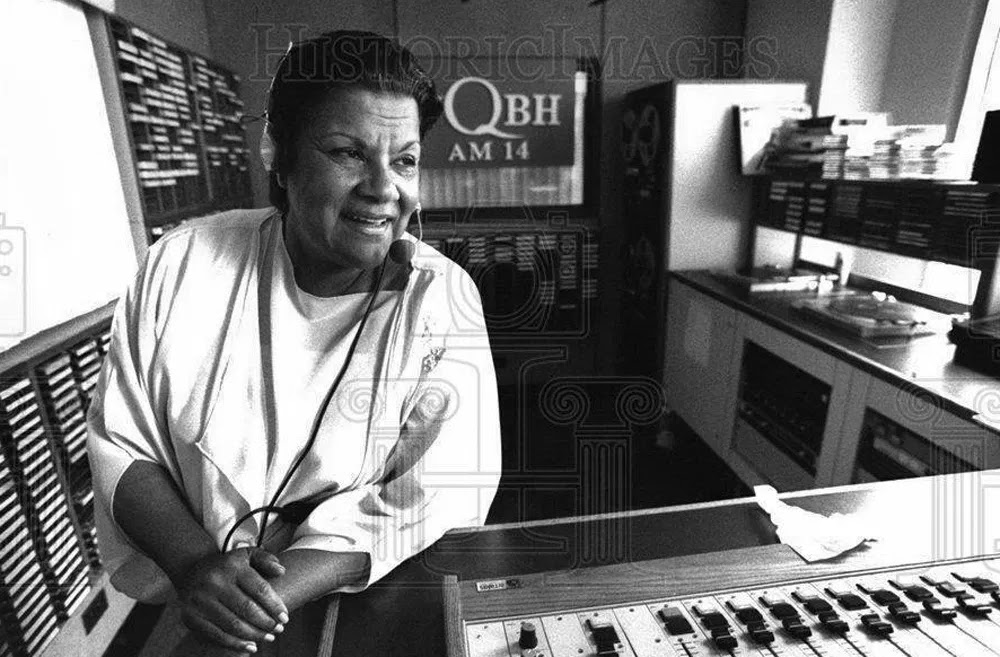
Martha Jean the Queen—Patron Saint of Blue Collar Detroit

Martha Jean the Queen painted by DeVon Cunningham (1976) 

A couple of radio executives from WCHB-AM in Detroit were driving through Memphis on business in 1963 when they heard the voice of Martha Jean the Queen (MJQ) on their radio. They liked the Queen’s Southern accent and her facile deejay patter. These Northern radio men were in the South shopping for an African American disc jockey that could help WCHB-AM (Inkster, Michigan) capture the vast Detroit Black radio market. Most Black Detroiters had Southern roots, so it seemed like a sensible marketing strategy.

MJQ was number one in her Memphis time slot which was a notable achievement in the Jim Crow South for a Black woman disc jockey—a testament to her ability to draw an audience. These Northern radio execs called Martha Jean at WDIA–AM and offered her a raise of $30 a week if she would take her radio program to Detroit. MJQ was a recently divorced, single mother of three daughters who didn’t want to move, but Martha Jean had custody and needed the extra income, so she took the job.

Martha Jean Jones was born on September 9, 1930 in Memphis and graduated from a Catholic school. She began nursing school but the harsh realities of life and death pushed her into business school. As fate would have it, Martha fell in love with jazz trumpeter Luther Steinberg, married him, and had three daughters in quick succession. She saw her life as the manifest destiny of a young Southern Black woman, a child of poverty, followed by a volatile marriage, bondage to babies, and a lifespan of degradation by Whites.

Luther Steinberg was struggling in the music business when he became abusive to Martha Jean, so she divorced him. “There are two things I can’t stand,” she said commenting on her failed marriage in a Detroit Free Press feature article on January 10, 1982, “a man who is cheap and a man who runs around on his woman.”       


Martha Jean used the power of positive thinking to pick herself up and provide for her children. “We should all try to see the beautiful side, the positive side (of life),” she said, “but the ugly side has been with us as a people for a long time and with me personally as a divorced woman with children.”

Martha Jean Steinberg became a receptionist for Memphis radio station WDIA-AM. Because she had a pleasing manner dealing with everyone who walked through the door, the station manager gave her a try on the radio in 1954 as a substitute for an ill disc jockey and she stayed there for nine years learning the radio business and earning the title The Queen. Her patented tagline "You betcha!" after she read advertising copy was like money in the bank for advertisers.

In a May 21, 1967 Detroit Free Press Sunday interview, MJQ was asked what her radio name “The Queen” meant to her. In figurative deejay fashion she answered, “I was written in the sands of time 5,000 years ago, endorsed and smiled upon by the gods. I have a purpose, and I’m on my way to fulfill my purpose…. I am the Queen of the people, they are my purpose.”

When MJQ came to Detroit, WCHB wanted her to play easy listening rhythm and blues and read advertising copy. MJQ’s Homemakers Delight program ran from 10:00 AM until 12:00 PM for three years. One of her early challenges was the perception that she sounded too White to project the Black image over the airwaves. “I had to get down with it to prove I was Black enough and find my place in Detroit’s Negro community, so in many ways, I had to act and sound more colored than colored. Detroit had long been a haven for jazz musicians, so I introduced jazz to my musical lineup and my audience grew.”

MJQ became known for supporting women’s rights throughout the 1960s reminding blue collar wives when it was payday at the Ford plant or Great Lakes Steel—the two largest employers of Black men in the Detroit area. “Get that check from your man before it disappears, ladies.” Martha Jean was proud of herself for making it without "the crutch of a man.” She never forgot the desolation of being left alone with three daughters and no money. The Queen was an inspiration to her soul sisters in the audience.

Unsatisfied with her limited role at WCHB, MJQ jumped stations again when WJLB-FM offered her more money, air time, and freedom to co-produce her own programming. In addition to playing music, she added a fifteen minute call-in segment named Tasting Time where she gave her daily salute to blue collar people around the Detroit area.

In a Detroit Free Press feature article on October 23, 1966, MJQ explained her move, “WJLB-FM will give me a better opportunity to serve my people and do things for them. The secret of my success in Detroit are the people—the forgotten blue collar workers. I like and enjoy people. I feel a disc jockey has command of so many hearts and minds…. I give my listeners a positive reality and that surge of hope necessary to exist. I feel my day is in vain if I can’t touch someone or lift their spirits.

“In my own Southern way of talking, a lot of people started listening to me. My positive message gives people self-confidence to accomplish whatever is challenging them. I’d play blues, and between each bar of a song, I’d talk without interfering with the lyrics and say things like ‘Hey! You cats at Kelsey Hayes’ or ‘You guys in the hole on Ecorse Road’ when the Wayne County Road Commission was working on the roadway. These blue collar workers were listening on transistor radios at work, and it made them feel like somebody when I mentioned them or their place of work on the air. Soon, places all over town began asking me to give them a call out over the airwaves. My slogan was ‘You’re somebody, act like it’.”


During the 1967 Detroit Riots/Rebellion, MJQ broadcast for 48 hours straight urging Black demonstrators to get off the streets and stay home. She helped police negotiate with armed Black Panthers barricaded in a house into surrending peacefully to avoid bloodshed because innocent women and children were inside. That terrible conflagration was transformative for Detroiters. From that moment onward, Martha Jean felt a responsibility to be a bellwether for her people. In the 1970s, MJQ moderated a show called Buzz the Fuzz with Detroit Police Commissioner John F. Nichols credited with improving police/community relations. Every Thursday from 7:00 PM until 7:30 PM, callers could ask Commissioner Nichols questions.

On January 11, 1971, MJQ gave a short scream into the microphone at noon, and then there was three hours of radio silence. Nine Black WJLB staff members—including MJQ—staged a sit-in by locking the studio door and barricading the plate glass front window of the station’s offices on the 31st floor of the David Broderick Tower. The on-air staff was all Black but management was all White. The staff charged that the outgoing station manager failed to live up to an earlier agreement to appoint a Black station manager to replace him. After all, WJLB’s listening audience was primarily Black. The sit-in strike ended at about 3:00 PM after attorneys for both sides met to settle the matter with Norman L. Miller being named as WJLB’s first Black station manager.

Three weeks later on February 2, 1972, Martha Jean had an on-air, religious epiphany. While doing her Inspiration Time program, she announced, “I was just touched by the Holy Spirit.” Then there was a brief pause. Pensively she continued, “It was as if something, a different entity, came through my soul and told me my mission is to help bring Jesus Christ to the people,” she explained. From that moment, MJQ shifted from Soul Mistress of Detroit to Radio Evangelist and began featuring gospel music.

In 1972, Martha Jean became an ordained minister and established her own nondenominational church in 1974. She purchased a two-story house on Grand River Avenue with a $70,000 Kresge Foundation Grant and named her church The Home of Love. She set about fulfilling her mission to serve the downtrodden and forgotten people of Detroit. Her organization raised money and bought the house next door for a church community nursery and preschool for daycare to help young Black women earn a living and get a leg up on life. The $12,500 mortgage for the Joy Building was paid off in cash.

MJQ left WJLB-FM on May 30, 1982 over a scheduling dispute. Their new station manager told Martha Jean he was switching her popular midafternoon time slot to their spiritual hour at 5:00 AM. The time change was unacceptable, and she wasn’t having any of it.

Two weeks later, MJQ signed with station WQBH-AM that specialized in Black-oriented religious and inspirational programming. She took over her familiar 11:00 AM to 2:00 PM afternoon time slot.  The new job also came with a pay raise in line with her new status as station vice president and program director. Fifteen years later, MJQ formed The Queen’s Broadcasting Corporation and purchased WQBH for $4.1 million dollars becoming the first woman-owned radio station in the country. She financed the purchase on the strength of her radio personality, her lucrative radio contract income, and her advertising agreements.You betcha!

Martha Jean the Queen passed away at the age of sixty-nine from an undisclosed illness at 10:45 AM on January 29, 2000 in Detroit’s Harper Hospital. Upon learning of Martha Jean the Queen Steinberg’s passing, The Detroit News reported, “She was hailed as an inspirational force that motivated people and served as a conscience for those needing guidance. Her listeners were the common, everyday folks from Detroit who lived from paycheck to paycheck.” MJQ had a private funeral service and was buried in Detroit’s Elmwood Cemetery.


In her lifetime, Martha Jean the Queen was honored as one of rock music’s pioneering disc jockeys—the only woman so honored. She is also a member of the Black Radio Hall of Fame, Michigan’s Black Women’s Hall of Fame, the Rock & Roll Hall of Fame, and what she was most proud of, the founder and spiritual leader of the Queen’s Community Workers of America, that did charitable works around the city for Detroit's forgotten people.

In 1976, Detroit docu-artist DeVon Cunningham painted MJQ’s portrait where she is wearing a blue caftan and surveys the heavens. It commemorates her trip to the Holy Land with seventy members of her Order of the Fishermen ministry. The painting is listed in the registry of the National Portrait Gallery of American Biography at the Smithsonian Institute.

Docu-artist DeVon Cunningham