Tuesday, October 15, 2013

The John Norman Collins Mess and My Motivation For Writing About It

A small number of people have questioned my motives for writing The Rainy Day Murders about John Norman Collins. Why reopen old wounds?

The sex slaying murders of seven and possibly more local young women created an atmosphere of sustained panic and mortal fear for college coeds on two college campuses, Eastern Michigan University in Ypsilanti and The University of Michigan in Ann Arbor. 

 ***

This tragedy left an indelible impression on me and anyone else who lived through that terrible period of Washtenaw County history. I first realized an arrest had been made in the "Coed Killer Case" when I was walking down from my apartment on College Place St. to have lunch at Roy's Grill, a diner on the corner of W. Cross and College Place. It was Friday, August 1, 1969, around 10:30 or so in the morning.

I lived only a block down the street and saw an assortment of four or five police cars surrounding the corner house on Emmet St. A small group of people had gathered across the street from the house; the police were keeping spectators away.

My first thought was that another girl's body had been found. A year before, Joan Schell, the second victim of a phantom local killer, had lived across the street from this very same Emmet St. house. Her body was found in farm country on the northern outskirts of Ann Arbor.

I approached someone I knew and asked him what was happening, "John Collins was arrested for the murder of that Beineman girl a week ago," he told me. 

My friend had occasionally ridden motorcycles through the countryside with Collins, and now and then they "exchanged" motorcycle parts, so he knew him. When I asked how he got his information, he pointed to a guy in front of the cordoned off house who was arguing with policemen. 

Arnie Davis lived across the landing from Collins on the second floor and described himself, during the court case a year later, as Collins' "best friend." Davis wanted to get his stuff out of the house, but it had already been locked down as a potential crime scene. 

I walked a scant block further to W. Cross St. and ate lunch at Roy's Grill. When I walked up the street to go home, the crowd had grown and the media had arrived by this time. I have a vivid memory of reporters questioning bystanders. 

When I saw Collins' picture in the newspaper later that evening, I was able to place the name with the face. I realized that I had several negative brushes with this guy while I was a student at Eastern Michigan. 

He tried to clothesline me once when I passed by him. Perhaps he was displeased with me because I witnessed him and his friend Manny attempt to break into a car on my street, College Place.

As I was about to walk past him, I ducked and swung around in a defensive position, but Collins and Manny continued walking down the street like nothing had happened. They headed towards the Emmet St. boarding house where they each rented rooms.

After learning of Collins' arrest, my mother called me on the phone relieved. She reluctantly told me that she had suspected I might be the murderer because I resembled the eyewitness descriptions in the newspapers. Can you believe that? Thanks, Mom.

***

When The Michigan Murders came out in 1976, I snapped it up like so many other people in Ypsilanti and anxiously read it. I was disappointed because I felt the novelization of the story took liberties with the facts and relied too heavily on official reports and the work of an Eastern Michigan University English Professor, Dr. Paul McGlynn.  He had allowed Edward Keyes to use his notes which McGlynn had gathered while attending the court proceedings doing research for his own book.

I soon discovered that many assumptions and liberties were taken with the story which made for smooth flowing fiction, but the real story is anything but smooth flowing. It is a ragged mess of complicated misinformation, shaky news reporting, and missing documentation. If this was an easy story to tell, it would have been done long ago.

The most frustrating and confusing aspect of Edward Keyes' novelization was that he chose to change the names of the victims and their alleged murderer. When another author took up the charge of this case some years later, he too changed the names of the victims and of the accused, and then referenced those names to the fictitious names which only compounded the confusion and led to the obscurity of the real victims.
  
Over forty-five years have passed since these sad events, and it is time for the record to be restored and updated. It may have been customary in the past for authors to change the names of victims to protect the families and their feelings, but those days are long gone. I would rather get the facts right than be polite. 


Friday, October 11, 2013

Aurora Borealis Lights Up Michigan Skies

Near Marquette, Michigan, on October 9, 2013
When I was twenty-one, I went camping in the northwoods on a granite outcropping that towered above the pine, birch, and cedar trees. It was about five miles west of Marquette in Michigan's Upper Peninsula.

As night fell, the cosmic light show began. I can attest that it was much better than anything I had ever seen in the heyday of Detroit's Rock Mecca, The Grande Ballroom. 

The night sky inspired me to write a poem. That was forty-four years ago, and I haven't seen the Northern Lights or the poem since.

But as luck would have it, I found a wonderful photograph taken recently on October 9th, 2013, by Ryan Stephens that captures a glimpse of how beautiful the heavens were that night so long ago.

Todd and Brad Reed Photography took a photograph of the same event from Ludington, Michigan, in the Lower Peninsula for a different perspective.

Same event from Ludington, Michigan

By the way, I found the poem I wrote so many moons ago. I'm awash with good memories of great times with old friends.


 Northern Lights

Near Marquette,
encircled by woodwinded
dark moans and whistling howls,
lies a Sanctuary of Stone.

Above noise, above trees,
this towering mound is dwarfed
by a panorma
of star strewn sky

shooting waves 
of promenading luminary reflections,
streaking and undulating,
a spectacle of the heavens

stroked with hues of
incarnadine, emerald, and canary.
The only show -
the only sounds around.
                                                             

Tuesday, October 8, 2013

John Norman Collins, aka Bill Kenyon - The 8mm Muscleman

My search for reliable information to restore the facts of the Rainy Day Murders has been a Sisyphean task.  

Drawing together what is known about John Norman Collins and the "coed killings" in one place is a huge undertaking but long overdue.

My researcher, Ryan M. Place, and I have invoked the Freedom of Information Act (FOIA) to obtain documents from the Michigan Department of Corrections, the Michigan State Police, and the Washtenaw County Coroner's Office, with several more government agencies pending.

Despite major gaps in the public records, we have discovered some interesting information by scouring through these boxes of government documents. Among the more surprising finds are some items on an evidence log in the Karen Sue Beineman case folder. 

Somewhere in the Michigan State Police vault in East Lansing, Michigan, there are weightlifting photos of John Norman Collins posing for Tomorrow's Man magazine as Bill Kenyon. He appeared in the September, 1969, issue which came out on newsstands at roughly the same time he was arrested for the first-degree murder of Karen Sue Beineman.

***

Tomorrow's Man was a pulp magazine popular in some male circles in the 1950s and 1960s. Under the guise of male physical fitness and weightlifting, the magazine was available on newsstands across the country and was often a young man's first exposure to alternative male lifestyles. Their magazine's motto was "Hunks in Trunks."

This was before gay rights and the lessening of the social stigma against male homosexuality. By the end of the 1960s, American culture underwent a fundamental shift in cultural mores. Tomorrow's Man became obsolete and went out of business. The magazine's back issues are collector's items and very hard to obtain. (See the link below for some of their iconic cover art.)

***

My researcher and I have made an additional FOIA request for the photos of JNC posing for Tomorrow's Man magazine.  These items were not used as evidence in the case, and the Michigan State Police has determined that they have no monetary value.
  • two 8x10 black and white stills of Collins posing
  • one 8x10 contact proof sheet with twelve poses
  • one copy of Tomorrow's Man magazine showing Collins posing as Bill Kenyon
  • fourteen color pictures of Collins posing
  • and a must see to believe - twenty-five foot long reel of 8mm film of John Norman Collins striking poses.
Last week, I wrote a Michigan State Police detective who has worked on these cases recently. I asked him to suggest to his commander that the state police consider digitizing the 8mm film stock before it fades to nothing and turns brittle in the can. If Ryan and I are successful in obtaining this film, we will post it on YouTube.

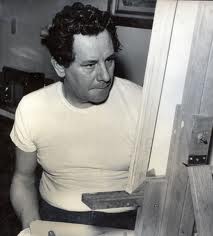
At the very least, we hope to secure some decent scans of photographs to include in a photo bank in the true crime book I'm writing, The Rainy Day Murders. The photograph of Collins above is a photocopy taken from a vintage Detroit Free Press article dated August 30, 1970.

http://www.pulpinternational.com/pulp/entry/Assorted-covers-of-Tomorrows-Man-bodybuilding-magazine.html

Thursday, October 3, 2013

Polish Village Cafe in Hamtramck, Michigan


No trip to Detroit is complete for me without eating some of the city's famous cuisine. Sure, White Castle and Coney Island dogs are local delicacies, but for my money, there is no place better than the Polish Village Cafe to get a real taste of ethnic European Detroit. 


"A Taste of Poland" (Polish Plate)
Located in Hamtramck, a city within the city limits of Detroit, the restaurant is easy to access from the Interstate. The neighborhood is in good repair and reminds me of when I grew up in the Oakwood area of Detroit in the early 1950s. The business section appears lively and active.


As great as the kielbasa, golabki (stuffed cabbage), pierogi, and nalesniki (crepes) were, something else caught my palate, a dark Polish beer named Zywiec [je-vi-ets] Porter. It is surprisingly smooth with a 9.5% alcohol content that complements the ethnic delights this restaurant has to offer.

To learn more about The Polish Village Cafe, watch this short video: http://www.youtube.com/watch?v=GZX5-JfCYeg

Also, enjoy this fantastic animation of Poland's history: http://www.youtube.com/watch?v=2DrXgj1NwN8

Saturday, September 28, 2013

Psychic Peter Hurkos Explains his Gift

When a serial killer has been at large in a community for an extended period of time, the public loses faith in local law enforcement and begins to look for its deliverance from other quarters.

The first manifestations of this are usually prayer vigils and crusades calling on divine intervention. If the killer continues to slaughter victims and eludes police long enough, calls for supernatural assistance inevitably arise.

The Jack the Ripper case is the most famous serial killer case in history, but by no means the first or the worst. In the Whitechapel area of London's East End, five women were butchered and left in streets and alleyways, and one was viciously mutilated in her bed. Then, the Ripper vanished into history.

Noted British spiritualist, medium, preacher, and Fleet Street journalist, Robert James Lees believed he saw visions of Jack the Ripper and went to police with that information. Scotland Yard turned him away thinking he was on a lunatic fringe. For a short while, Lees was himself a suspect in the Ripper case.

Sooner or later, psychics turn up in virtually every serial killer case. The first person to bill himself as a "police psychic" was Dutchman Pieter van der Hurk, known in America as Peter Hurkos. 

When the Stone of Scone was stolen from Westminster Abbey in 1950, legend has it that Hurkos told police that the Scottish relic was stolen as a prank but would soon be found. Just over a week's time later, the Stone was recovered. The French press had a field day with the story.

Hurkos received international press coverage, which made him an instant celebrity in Europe. By the end of the decade, he migrated to the United States and developed a supper club act based on his notoriety in solving crimes for police around Europe. Most of his claims were anecdotal and lacked official documentation.


In 1961, Peter Hurkos, with the help of  V. John Burggraf, wrote his autobiography simply titled Psychic. He tells of the origin of his gift of "second sight," a fall from a four story building, and he proceeds to give numerous examples of his more notable cases with "extrasensory perception" (ESP).

Hurkos tells his readers early in his story that his strange gift has baffled and astounded scientists and researchers throughout the world. "I am what parapsychologists refer to as a psychic. I am sensitive to people and events that concern them," he purports. Without giving any names or sources, Hurkos claims, "I have been told by scientists that my psychic gift is, so far as they know, the most highly developed in the world."

"I can read vibrations through a phenomenon known as psychometry. Another way to look at it is divining facts through physical contact with an object or its owner. Psychometry is only one of the many facets of my gift of ESP, the famous 'Sixth Sense' of history and legend. I also have the gift of 'precognition'."

Peter Hurkos cites in his book others from history who have had "inner vision." He mentions the prophet Isaiah of The Bible, the prophecies of Nostradamus four hundred years ago, and Edgar Lee Cayce, a famous twentieth-century sensitive. He criticizes Nostradamus for "vague predictions."

"I have never claimed more than eighty-five and one-half percent accuracy in my readings, as established by scientists performing thousands and thousands of tests with me."

Peter Hurkos equates that "emanations from a person or an object do exist, just as heat waves, radio waves, and electric impulses exist." He claims to be sensitive to vibrations from:
  • an object a person has touched
  • a piece of clothing the person has worn
  • a bed a person has slept in
  • anything a person is associated with
  • even a photograph of the person
Hurkos writes that when his powers are very strong, he can hold a telephone line while the phone is in use, and without having heard the conversation, "images leap into my mind like pictures on your television screen."

Peter Hurkos gained national attention in America when he was the subject of a One Step Beyond episode, a television supernatural series in the early Sixties. 

Peter Hurkos in custody
In 1963, he interjected himself in the Boston Strangler investigation, much to the displeasure of the Boston Police Department. After being arrested for impersonating a police detective and harassing a potential witness, he left the city under duress. Charges would be made and a trial would be held if he didn't leave town immediately.

Nonetheless, Hurkos was portrayed by an actor in the Hollywood film, The Boston Strangler, which did much to rehabilitate his popular reputation. 

Peter Hurkos, wife Stephany, with actress Kathryn Grayson
He became a regular guest on the television talk show circuit, gave private readings to celebrities and the wealthy, and he continued to perform his Las Vegas and Hollywood nightclub act with his wife/assistant, Stephany, but his bookings waned.

In 1969, Hurkos received an unexpected offer from a citizens' group to come to Ann Arbor, Michigan, and help police solve another serial killer case. Six local young women had been sexually assaulted and killed within a two year period, and the police were baffled.  

Reluctantly, he agreed. He was hoping he could regain some lost credibility and jump-start his career, if he could only solve these brutal sex-slayings before the killer would strike again.


One Step Beyond episode: The Peter Hurkos Story.
http://www.youtube.com/watch?v=Ei0m__zST_0

Tuesday, September 24, 2013

New John Norman Collins Documentary on Investigative Discovery in December

The John Norman Collins movie begun in 1976, Now I Lay Me Down To Sleep, was never completed despite rumors to the contrary. As far as anybody knows, no film footage from the original shoot exists. Of course, we are still looking for whatever we can find.


Sometime this December, The Investigative Discovery channel will debut a true-crime show called "A Crime To Remember." The network will run an episode called "A New Kind of Monster" on John Norman Collins and the Washtenaw County murders that occurred in Michigan in the late 1960s.


In addition to interviews with people familiar with these cases, this episode will include re-enactments of these crimes interspersed throughout the narrative. This show is a fresh look at a case that largely fell through the cracks of time.


When I receive the details when it will air, I'll pass the information on. Until then, here are the names of the full cast and crew. 


Executive Producer - Christine Connor

Series Associate Producer - Rebecca Morton

Director - Jeremiah Crowell

Assistant Director (Second Unit) - Paul Jarrett

Writer - Bruce Bennett

Cast (in alphabetical order):

Nick Adamson - John Norman Collins

Ardis Barrow - Joan Schell

Patricia Bartlett - Joan Goshe

Dan Berkey - funeral director

Devin Doyle - Dale Schultz

Erica Hernandez - Mary Fleszar

Johnny Kinnaird - State Police Detective

John Larkin - Sheriff Douglas Harvey

Scott Lehman - Corporal David Leik

Thomas J. Lombardo - Officer Matthewson

Kerri Sohn - Karen Sue Beineman 

Wednesday, September 18, 2013

The John Norman Collins Movie - Part Three of Three

In 1976, William Martin, (aka: Martin "Marty" Bacow), billed himself as executive producer for a movie based on the Washtenaw County murders of seven young women in 1967-1969 and their accused killer, John Norman Collins. 

He reported in an Ypsilanti Press article dated October 13th, that he had completed the script seven months before.  The movie was slated to be called Now I Lay Me Down To Sleep, named after the children's bedtime prayer. "The filming should start sometime after the new year," Martin said.

William Martin, known as Marty, hired a New York film director (who wishes not to be identified) to assemble a film crew and come to Ypsilanti/Ann Arbor to shoot a low budget film. 

This Director of Photography (DP) says he and his crew drove two film trucks to Ann Arbor only to find that "Marty had no script, just a sketchy outline and nothing else. He had no cast, no locations, and he had only partial financing for the project." William Martin was confident that publicity would attract investors and additional funding, the life blood of the movie industry.

Rory Calhoun in "The Texan"
William Martin (executive producer) named local attorney Jay Kaufman to be the producer. It was his job to raise the money. Somehow, Martin was able to land Hollywood actors Rory Calhoun, to play a Michigan Sate Police post commander, and Kathryn Grayson of Hollywood musical fame, to play John
Kathryn Grayson in "Kiss Me Kate"
Norman Collins' aunt, Sandra Leik. These actors were represented by the same booking agent, who it was thought, owed Marty a favor. 
Psychic Peter Hurkos was hired to play himself and Bill Bonds, a local Detroit television newscaster, was also hired to play himself. Other roles would be cast by locals as they went along.


The DP said they shot footage for four or five weeks. On a typical day, there would be no casting and no preset location. "Marty rode around in a Cadillac convertible and literally acquired a cast and locations along the way. We were shooting cinema verite."

"For example, we went to the Michigan State Police headquarters and suddenly real state policemen were playing troopers in the movie, and we were shooting scenes in and around the police post."

Towards the end of the exterior and location shooting, Martin Bacow (aka: William Martin) was being questioned by Federal authorities about the disappearance of Teamster boss Jimmy Hoffa and where his body might be buried. Because of the controversy, word came down that the studio pulled the plug on the project.

The film crew was left high and dry. This was the weirdest film shoot any of them had ever been on, and they speculated that the film may have been a scheme to raise money and defraud investors.

William Martin produced several low budget movies over his career. One of them, Jacktown, is about a Jackson Prison inmate who tries to go straight in Royal Oak, Michigan. A short viewing of this film will convince anyone that William Martin (Martin Bacow) was no filmmaker.

When I wrote and contacted Paramount Pictures in Hollywood, I was told that they had no knowledge of Now I Lay Me Down To Sleep. Their archivist checked their records and film vault and found no evidence of any film rushes or publicity stills from the movie. They had no record or association with the film.

Further research on Martin "Marty" Bacow (aka: William Martin), discovered in a book entitled The Last Mogul by Dennis McDougal, revealed "Martin Bacow, a Hollywood jack of all trades, began his career in Southern California in 1948 as a boxing announcer, who then branched out over the next four decades to become an actor, screenwriter, labor negotiator, and a B movie producer."

A close associate of Teamster President Jackie Presser, Bacow was known as the Teamster's man in Hollywood. It was rumored he could start and settle labor disputes in Tinsel Town. 

The DP recollected that during the filming in Ann Arbor that "Marty was always seen in the presence of two Teamster consultants, William 'Candy' Davidson and Marvin 'The Steel Broker' Mulligan, who acted as Martin's private security."

Lost JNC Movie post - part one: http://fornology.blogspot.com/2012/05/the-lost-john-norman-collins-movie-part.html 

Lost JNC Movie post - part two: http://fornology.blogspot.com/2013/09/the-lost-john-norman-collins-movie-part.html